
Last Updated on January 30, 2026 by admin
Dental implants represent a significant investment in your oral health and quality of life, offering a permanent and stable solution for missing teeth. However, like any medical procedure, they require diligent care and monitoring to ensure long-term success. A condition known as implantitis, which is the inflammation and infection of the tissues surrounding a dental implant, poses one of the most significant threats to their longevity. Recognizing the implantitis symptoms early is not just a matter of comfort — it is crucial for saving your implant and preventing extensive bone loss.
Many patients mistakenly believe that once an implant has healed, it is impervious to problems. This misconception can lead to a dangerous delay in seeking treatment at the first sign of trouble. Understanding the early signs of implantitis empowers you to take proactive steps, transforming you from a passive patient into an active participant in your oral health. This guide will walk you through everything you need to know, from the first subtle hints of a problem to the decisive actions you should take to protect your investment and your smile.
What is implantitis?
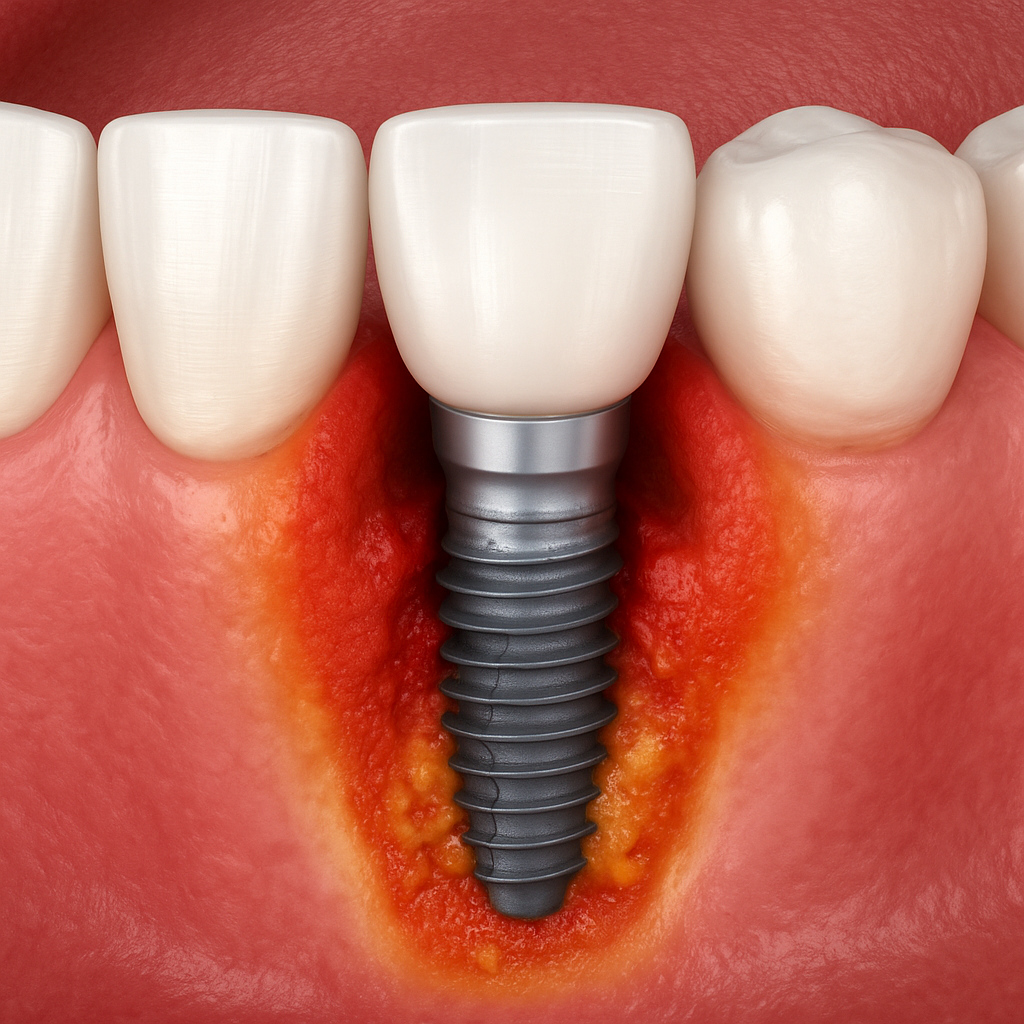
Implantitis is a destructive inflammatory process that affects the soft and hard tissues surrounding a dental implant. It begins as a reversible inflammation of the gums, known as mucositis, and can progress to a more severe stage where it causes the gradual loss of the supporting jawbone. This bone loss is what ultimately jeopardizes the stability of the implant itself. Essentially, it is the dental implant equivalent of periodontal disease that affects natural teeth. The key to successful implantitis treatment lies in catching it at its earliest, most manageable stage, before significant and irreversible damage has occurred to the underlying bone structure that anchors your implant dentures.
The first early symptoms of implantitis
The initial signs of a problem are often subtle and easy to dismiss. Vigilance during your daily oral care routine is your first and best defense. The early signs of implantitis are frequently visual or sensory changes around the implant site that differ from your normal, healthy state. Learning how to recognize implantitis early involves looking for these specific changes:
Slight Redness
The gums around the implant may appear redder or more inflamed than the surrounding gum tissue.
Mild Swelling
A subtle puffiness or swelling in the gums directly adjacent to the implant.
Bleeding When Cleaning
A small amount of bleeding when you gently brush or floss around the implant.
Change in Gum Texture
The gums might feel tender or look slightly glossy and stretched.
Minor Discomfort
A vague feeling of pressure or sensitivity, rather than sharp pain around dental implant sites.
Why does pain not always appear immediately?
One of the most deceptive aspects of this condition is that dental implants pain is not always a primary symptom in the early stages. The inflammatory process often starts deep within the gum pocket around the implant, where there are fewer nerve endings. Furthermore, because the implant itself is a titanium post without a periodontal ligament (the sensitive tissue that surrounds natural teeth), the initial infection can progress without triggering the classic dental implants painful response you might expect. This is why relying on pain as your only warning signal is a critical mistake.

Alarming symptoms
As the condition progresses from mucositis to true implantitis, the symptoms become more pronounced and concerning. If you notice any of the following signs, it is imperative to schedule an appointment with your denture specialist immediately. These are clear indicators that the health of your implant is compromised.
Visible Redness and Swelling
The gums around the implant appear persistently red, swollen, and inflamed, losing their healthy, firm, pink appearance.
Bleeding When Probing
Your dentist may notice bleeding upon gentle probing around the implant during a check-up, a key clinical sign of inflammation.
Gum Recession
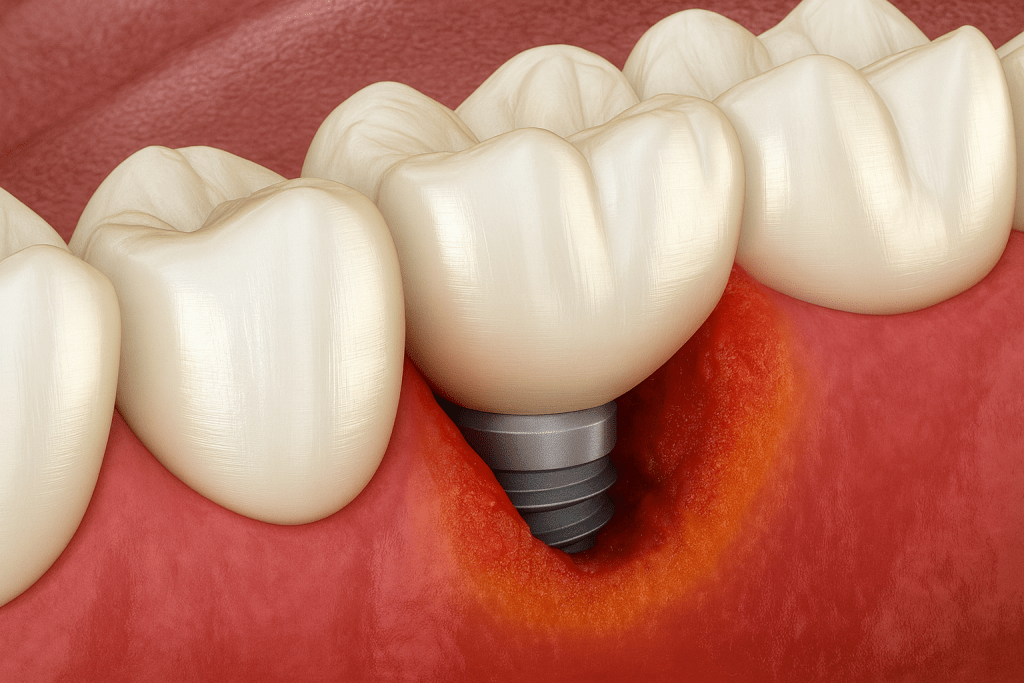
The gum line begins to pull away from the implant, which can make the implant post or abutment more visible.
Deepening Pockets
The space (or pocket) between the gum and the implant deepens, creating an environment where harmful bacteria can thrive.
Pus or Discharge
The presence of pus or a bad-tasting discharge exuding from around the implant is a definitive sign of active infection.
Pain and Tenderness
As the infection worsens and begins to affect the surrounding bone and tissues, you will likely begin to experience localized pain around dental implant sites, especially when chewing.
Loosening of the Implant
In advanced stages, the bone loss becomes so significant that the implant loses its stability. This is the most severe symptom and often indicates that the implant may be failing.
The main causes of implantitis
Understanding why implantitis develops is fundamental to both treatment and prevention. The primary cause is almost always bacterial. A sticky film of bacteria called plaque builds up around the implant, particularly in hard-to-clean areas. If this plaque is not regularly and effectively removed, it hardens into tartar (calculus), which further irritates the gum tissue and allows the infection to penetrate deeper.
Reasons with an explanation
Several key risk factors can accelerate this process. Poor oral hygiene is the number one contributor, as it allows plaque to flourish. Patients with a history of periodontal disease are at a higher risk because the same bacteria that affected their natural teeth can now target the tissues around the implant. Smoking is a major risk factor, as it compromises blood flow and the body’s ability to heal and fight infection. An improperly positioned implant or a poorly fitting final crown can create areas that are impossible to clean effectively. Lastly, systemic conditions like uncontrolled diabetes can impair healing and increase susceptibility to all kinds of infections, including those around upper denture implants.
What to do if you notice symptoms
If you observe any of the implantitis symptoms described, the single most important step is to contact your dentist or denture specialist without delay. Time is of the essence. Your dentist will perform a comprehensive examination, which will likely include measuring the pockets around the implant, taking X-rays to assess the bone level, and evaluating the health of your surrounding gums. Early intervention can make the difference between a simple, non-surgical procedure and complex, costly surgery to save the implant.
Why you can not treat yourself
Attempting implantitis treatment at home is not only ineffective but can be dangerous. While excellent oral hygiene is crucial for prevention, it cannot reverse an established infection that has progressed below the gumline. The specialized tools and techniques required to decontaminate the implant surface — such as titanium brushes, air-powder abrasion, or laser therapy — are only available in a clinical setting. Using over-the-counter remedies or antiseptics may temporarily mask symptoms but will not address the root cause, allowing the disease to progress silently and cause more damage.
How to prevent implantitis?
Prevention is always better than cure, and this is especially true for dental implantitis. A proactive approach centered on meticulous oral care and regular professional supervision is the most effective strategy to ensure your implants last a lifetime.
List of tips
Meticulous Oral Hygiene:
- Brush at least twice daily with a soft-bristled toothbrush and use low-abrasive toothpaste. Clean around the implants meticulously, paying special attention to the gum line.
Interdental Cleaning is Non-Negotiable:
- Use implant-safe floss, water flossers, or interdental brushes daily to remove plaque from between the implant and adjacent teeth.
Regular Professional Cleanings:
- Visit your dentist every 3 to 6 months for professional cleanings. These visits allow for the removal of any hardened tartar and for a professional assessment of your implant health.
Quit Smoking:
- Eliminating tobacco use is one of the most significant steps you can take to reduce your risk.
Manage Systemic Health:
- Keep conditions like diabetes under control, as overall health directly impacts oral health.
Use Recommended Products:
Your dentist may recommend specific antimicrobial mouth rinses or cleaning aids designed for implants.
Conclusion
Your dental implants are designed to provide a long-term, functional, and aesthetic solution. Protecting this investment requires awareness and action. By learning how to recognize implantitis early and understanding how implantitis starts, you equip yourself with the knowledge to act decisively. Do not ignore the warning signs, no matter how minor they may seem. Consistent, excellent home care combined with a strong partnership with your dental professional is the ultimate formula for preventing dental implantitis and enjoying the full benefits of your smile for decades to come.
Ready to Find Your Perfect Smile?
Understanding this clinical process – from the initial consultation through the denture surgery recovery period – empowers you to navigate the entire journey with confidence. Knowing exactly what to eat after denture surgery and having a realistic timeline for the denture surgery healing time prepares you for a smooth and successful recovery. By partnering with a trusted denture specialist and diligently following all post-operative guidelines, you can achieve a comfortable, functional, and aesthetically pleasing smile. Whether you choose traditional appliances or advanced upper denture implants, this journey represents a profoundly positive step toward regaining your oral function and overall confidence, ultimately enhancing your daily life and well-being through restored dental health.
Book a consultation today and let us help you or your loved one smile with confidence again
Taking care of your smile isn’t just about appearance — it’s about health, comfort, and being able to enjoy life’s little moments without worry. From family dinners to laughing with friends, dentures should support your lifestyle, not get in the way.
📞 Call now 587-966-3368 or 👉 Book Online