
Last Updated on March 25, 2026 by albertadentures
The two main types of complete denture prosthesis are removable full dentures and fixed implant-supported full prostheses. That is the short answer most patients want first. The longer answer is that both options replace all teeth in an upper or lower arch, but they differ in support, stability, maintenance, and daily feel.
Many people start by asking what dentures because they want the simplest possible explanation before comparing options. Dentures are prosthetic restorations that replace missing teeth and help restore chewing, speech, facial support, and confidence. Once all teeth are missing on an arch, treatment usually moves into complete denture care rather than partial replacement.
Patients also search for different kinds of false teeth because they are trying to understand which solution will feel more natural in daily life. The answer depends on oral anatomy, bone availability, lifestyle, health history, and expectations about comfort. At Alberta Dentures, we explain both options clearly so patients can choose based on function, maintenance, and long-term predictability rather than guesswork.
A complete solution should not only fill the space where teeth were lost. It should also protect oral tissues, support the lips and cheeks, and allow stable function during meals and conversation. That is why the difference between removable and fixed treatment matters so much.

Removable Denture Prosthesis
A removable option is the traditional form of full-arch replacement. It sits on the gums and underlying bone ridge and can be taken out for cleaning and overnight soaking. This approach remains common because it is non-surgical, widely accessible, and appropriate for many patients.
In clinical terms, this is a removable dental prosthesis. It is custom-made to follow the shape of the mouth and create the best possible seal and balance. A well-made removable appliance can restore appearance very effectively and can also improve speech and eating compared with having no teeth at all.
Many patients choose removable dentures because they want a treatment that does not require surgery or a longer healing process. This option can also be useful when bone levels are limited, when health factors make surgery less desirable, or when a patient wants a simpler first step.
Main characteristics of a removable full prosthesis include:
- it rests on the gum tissue and underlying ridge;
- it can be removed for cleaning;
- it does not require surgical placement of posts;
- it may loosen over time as the bone changes;
- it often needs periodic adjustments or relines.
The biggest strength of this option is simplicity. The biggest limitation is movement. Even a well-made appliance can shift slightly during eating or speaking, especially on the lower arch. Over time, natural bone resorption can reduce retention and change fit. That is why regular maintenance matters.
For patients considering this route, Complete Dentures provides a useful starting point.
Comment from our lead denturist:
A removable solution can work very well, but long-term comfort depends on precise fit and timely follow-up care.
Fixed Implant-Supported Prosthesis
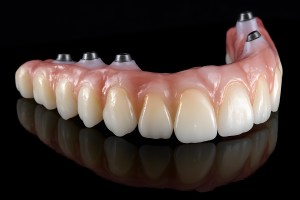
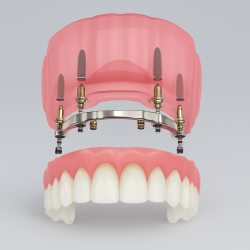
A fixed full-arch prosthesis is supported by implants placed in the jawbone. Instead of relying only on the gums for retention, it is anchored to implanted posts, which gives it a more stable feel. Patients usually describe this option as more secure during chewing and more natural during speech.
This is one of the most advanced false teeth types available for full-arch restoration. Because it is supported by implants, the prosthesis resists shifting and can provide stronger bite confidence than a conventional removable design. It also tends to preserve function more predictably over time.
A fixed solution is not ideal for every patient. Adequate bone, proper planning, and a surgical phase are required. Healing time must also be considered. Still, for suitable candidates, this option can make a significant difference in comfort and day-to-day confidence.
Here is a simple comparison:
| Feature | Removable full denture | Fixed implant-supported prosthesis |
| Support | gums and ridge | implants in bone |
| Stability | moderate | high |
| Removal by patient | yes | no |
| Surgery required | no | yes |
| Maintenance style | remove and clean | fixed cleaning routine |
Patients who want to explore this path can review Implant Dentures here.
The key benefit is stability. The key trade-off is complexity. A fixed approach usually requires more planning, higher investment, and careful maintenance around the supporting posts.
Alberta Dentures helps patients compare both options realistically. The right treatment is not always the most advanced one on paper. It is the one that matches the patient’s anatomy, goals, and ability to maintain the result properly.
How Dentures Are Made and Fitted
Creating full dentures is a staged clinical process, not a one-visit shortcut. Accuracy matters at every step because small errors in impressions, jaw records, or try-ins can affect comfort later.
The typical process includes the following stages:
- Consultation and examination.
- Impressions of the upper and lower arches.
- Bite registration to establish jaw relationship.
- Trial setup to assess appearance and function.
- Final delivery and adjustment appointments.
The fitting stage is especially important because the mouth is dynamic. Muscles, tongue position, saliva, and ridge shape all affect performance. A prosthesis that looks good on the model still has to work well inside the mouth.
Patients often underestimate how much follow-up care matters. Pressure spots, sore areas, and changes in bite can develop even with a well-made prosthesis. Early adjustments protect the tissues and improve adaptation.
For a broader look at discomfort triggers, Causes Of Denture Pain is a useful internal resource.
Ongoing care also includes professional cleaning and maintenance guidance. Denture hygiene remains a core part of long-term success.
We as a team recommend treating the first weeks as an adjustment period, not as proof that something is wrong. Minor refinements are common and often expected.
When to Get False Teeth
Patients often ask when to get false teeth because they are unsure whether to act immediately after major tooth loss or wait until daily function becomes harder. In most cases, earlier planning leads to better outcomes. Waiting too long can allow bone loss, bite collapse, and changes in facial support to become more significant.
Signs that it may be time for full-arch replacement include major tooth loss, poor chewing ability, repeated pain in remaining teeth, severe breakdown that limits restoration options, or a failing dentition that no longer supports normal eating and speaking. A full clinical evaluation is needed to decide whether all remaining teeth should be replaced or whether a partial design could still work.
When some natural teeth remain healthy and usable, Partial Dentures may still be the better solution.
The right timing is not only about appearance. It is also about preserving comfort and function. A patient who waits until eating is severely limited often has fewer options than a patient who plans earlier.
Alberta Dentures encourages patients to assess both comfort and future risk, not only current appearance. When the remaining teeth can no longer provide predictable function, a complete solution may be the more stable path.
If you want to review the clinic’s broader services, check the Alberta Dentures website.
For direct questions or booking, Contact clinic.
When to Seek Professional Help
The two main types of complete denture prosthesis are removable full dentures and fixed implant-supported full prostheses. Both can replace a full arch successfully, but they are designed for different needs. One offers simplicity and accessibility. The other offers greater stability and stronger support.
Choosing between them requires more than comparing price or appearance. It requires looking at anatomy, expectations, maintenance habits, and long-term goals. Regular professional maintenance and timely adjustments are the most effective preventive measures. With proper assessment and careful fitting, either option can restore function and confidence effectively..

Book a consultation today and let us help you or your loved one smile with confidence again
Taking care of your smile isn’t just about appearance — it’s about health, comfort, and being able to enjoy life’s little moments without worry. From family dinners to laughing with friends, dentures should support your lifestyle, not get in the way.
📞 Call now 587-966-3368 or 👉 Book Online